It’s popular among poets, teacher says, so create
an ekphrasis, words that exists only to adore someone else’s art
devotee, deconstructivist, parasite, pirate in the night,
so many possible exits after you have stayed in the room of another artist.
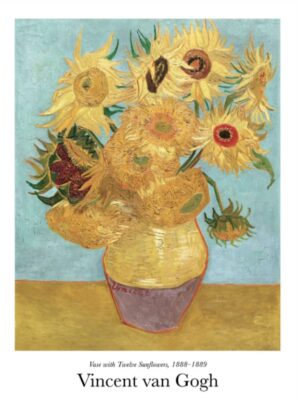
It’s sunflower season, so naturally I summon Van Gogh to me,
he that plundered the sunny perennial for its wonders of wellbeing.
He is ecstatic! Says painting them makes him more cheerful.
“I’m painting with the gusto of a Marseillais eating bouillabaisse … large sunflowers.”
He wants to decorate his studio with nothing but supersized sunflowers
“A symphony in blue and yellow.”
He warns us the gorgeous light of Arles can drive a man crazy and admits
he is so inclined
We crazy ones, let’s anyway enjoy with our eyes, shall we?”
Suddenly sad, he laments the burdens of the body, the very one that allows him to paint.
Pain and pleasure are both palpable, knowing what I know,
his the saddest of all ends, I can only nod with compassion.
He asks why I am writing about a painting of sunflowers instead of the blooms themselves.
A good question, but before I can answer,
he begins to spiral about the future.
Are there still sunflowers in your time?
Are they only for the rich?
Please don’t tell me they are gone.
He grows concerned, despondent even.
I can’t bear him more burden – he has endured enough already.
Yes! I reassure him, we still have sunflowers and not just for the rich.
They grow wild along country roads and across hillsides, pointing as always, to tomorrow.
I add that we also still have despair and depression,
and the tenderest among us often do not get what they need.
In more than a century, I tell him, the world has changed in so many ways.
Yet not much at all.